
Written by Rachel Gerow, MA, RP. A reflection on caregiver nervous system regulation, mindfulness, and compassion fatigue in high-empathy roles, following a wellness session with the Midland OSPCA team.
In January, I had the privilege of spending time with the team at our local Midland OSPCA. It’s always meaningful to be invited into spaces where people care deeply about what they do, and that was immediately clear in the room. The work they do every day requires compassion, steadiness, and the ability to make thoughtful decisions under pressure. It asks them to hold tenderness and urgency at the same time – and that combination can be demanding.
Animal welfare workers are regularly exposed to situations most of us never see – animals who have been neglected, injured, abandoned, or abused. Over time, that kind of exposure has an impact. Compassion fatigue and vicarious trauma are real occupational risks in this field. So is moral distress. So is the quiet accumulation of stress that lives in the body long after a shift ends.
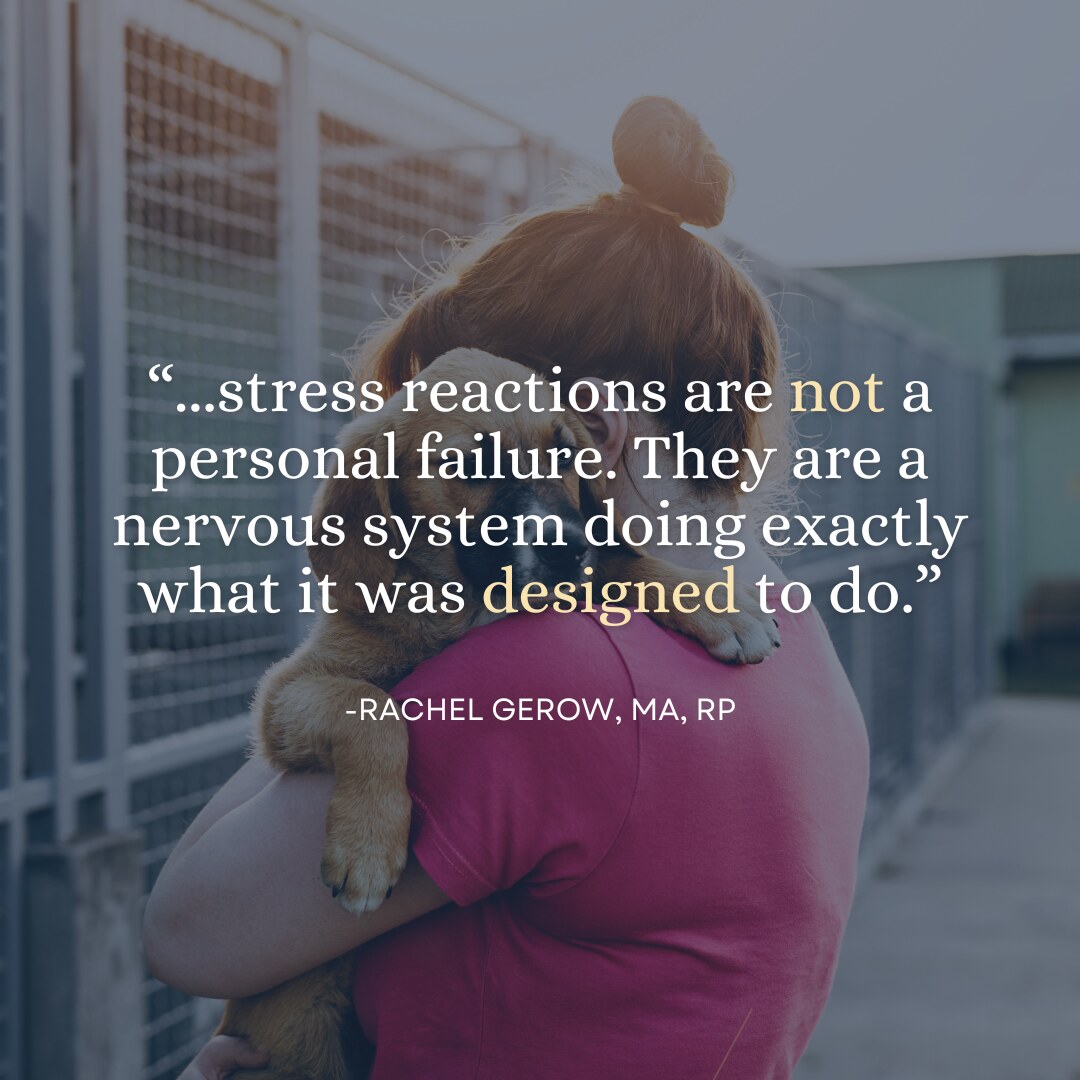
One of the things I wanted to normalize in our conversation is this: stress reactions are not a personal failure. They are a nervous system doing exactly what it was designed to do. When our internal alarm system turns on, our thinking narrows. We become more reactive. Our access to patience, flexibility, and perspective decreases. Under pressure, we don’t lose our skills – we lose access to them.
We talked about the difference between primary and secondary emotions. How grief, fear, or helplessness can sit underneath frustration or irritability. How self-criticism often shows up after a moment of overwhelm. Secondary emotions tend to drive behaviour. Primary emotions need care. Simply understanding that distinction can reduce shame and create a little more room for choice.
We also explored the idea that caregiver nervous system regulation isn’t about being calm, but about creating a bit more space between stimulus and response. Sometimes that space is just one slower exhale. Sometimes it’s noticing your feet on the ground. Sometimes it’s replacing “I shouldn’t feel this way” with “This is what’s here right now.” The team shared that they’ll sometimes check in with one another about how many “spoons” they have available that day – a simple way of naming capacity and energy in the moment. That, too, is regulation. It’s also awareness and honesty about limits, and it’s a powerful example of how small, shared language can reduce shame and increase support. Small shifts, practiced consistently, add up.
Because stress lives in the body, regulation has to involve the body. Insight alone isn’t enough. In high-pressure roles, accessible and tangible tools matter. During our discussion, I taught the team some practical emotion regulation and distress tolerance skills designed to help shift nervous system states by changing body chemistry. These small, embodied practices give people a way to calm, reset, and return to their work with steadiness and compassion. Supporting the nervous systems of animal welfare workers doesn’t just help the humans – it also helps the animals they care for.
Spending time with this team gave me a real appreciation for the heart, dedication, and care they bring to their work every single day. I left with gratitude for the openness they showed in sharing their experiences, their challenges, and even their small rituals of support with me. Being invited into their space reminded me how important it is to notice, acknowledge, and hold space for the humans who show up for others – animals and people alike.
And a little friendly reminder: the OSPCA is a completely non-profit organization that relies on community generosity to keep animals safe and cared for across the region. Whether it’s through financial contributions or donations of pet food, blankets, or towels, every bit of support helps both the animals – and the humans who care for them.