
Written by Rachel Gerow, MA, RP. Rachel reflects on the conversations and perspectives from ICED 2026 that stayed with her.
If you asked me what the highlight of my summer was, I would probably say attending ICED 2026.
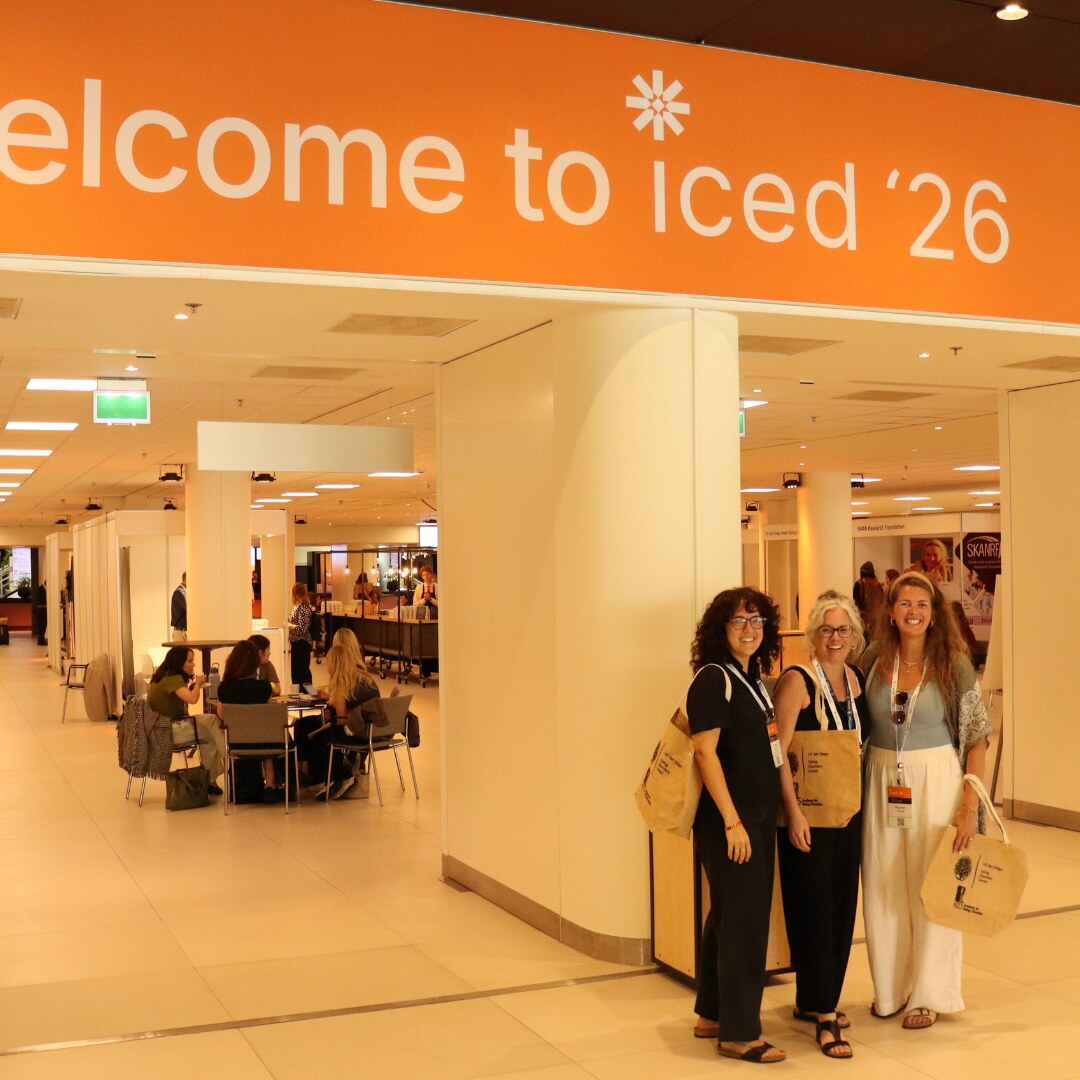
For those who may not be familiar, ICED is the International Conference on Eating Disorders, the annual conference hosted by the Academy for Eating Disorders (AED). This year, it took place June 3-5 at the World Forum in The Hague, bringing together clinicians, researchers, advocates, students, and people with lived experience from around the world.
And yes, part of the reason it was such a highlight was absolutely because I finally got to live out my European summer dreams. Spending a few days in The Hague, wandering around a beautiful European city, exploring between conference sessions, eating incredible food and getting to explore somewhere completely new was pretty hard to beat. The travel was definitely part of the highlight!
But it wasn’t just the travel. What made the experience so meaningful was everything that happened around the conference itself.
There was something really special about being surrounded by so many people who care deeply about eating disorder treatment and research, but who come to the work from such different perspectives and experiences. Researchers presenting their latest findings, clinicians sharing what they are seeing in practice, advocates pushing the field forward, and people with lived experience bringing perspectives that simply cannot be replaced by research or clinical training.
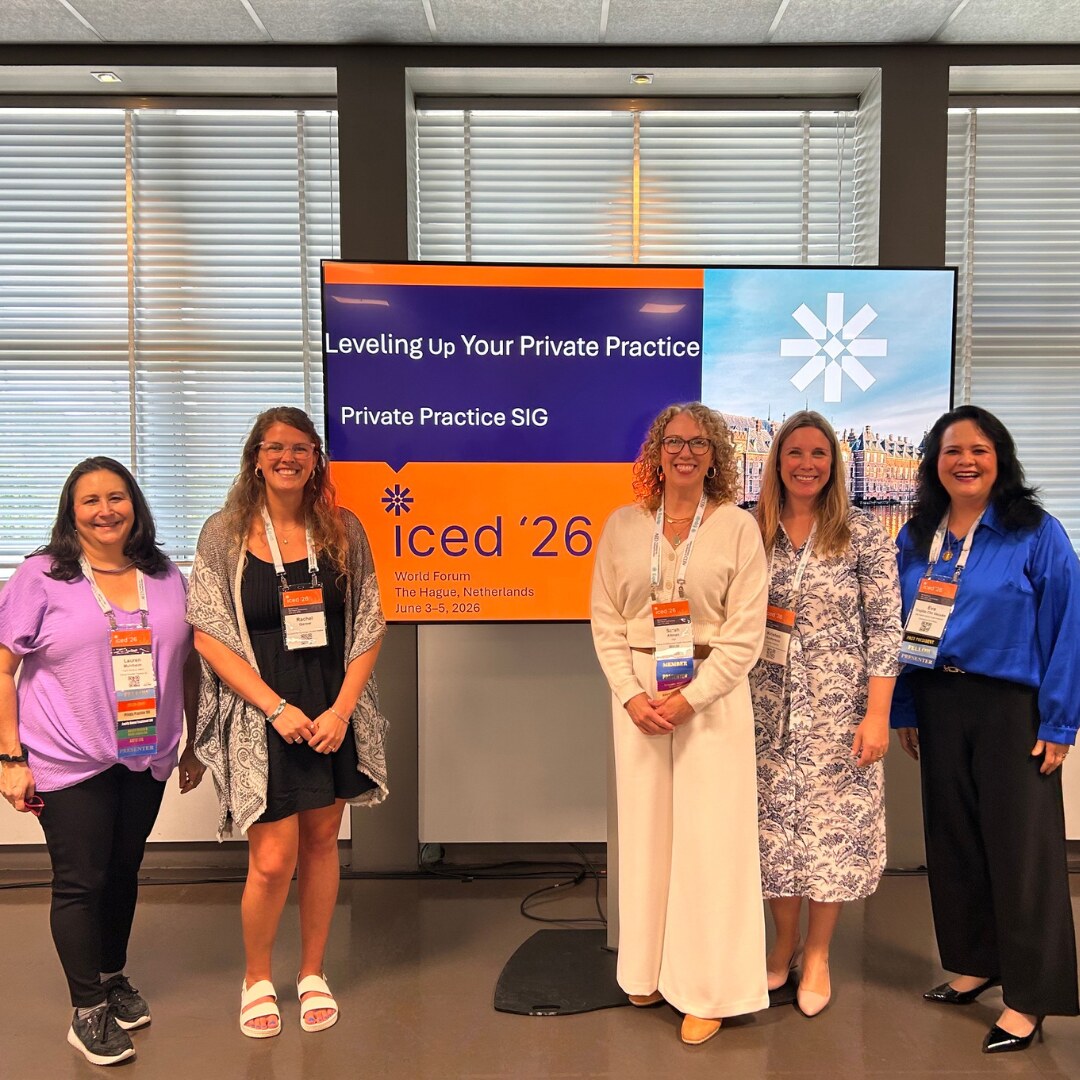
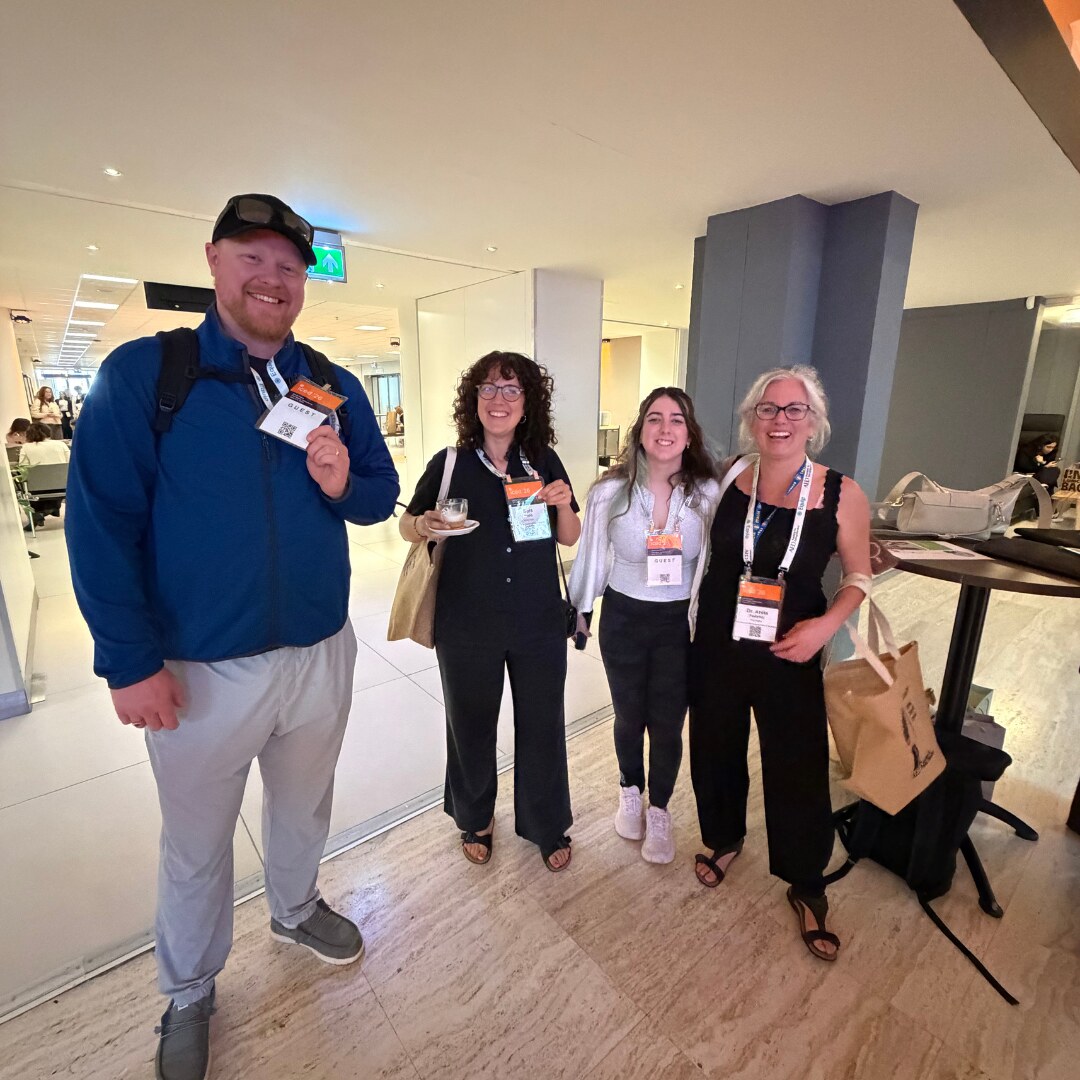
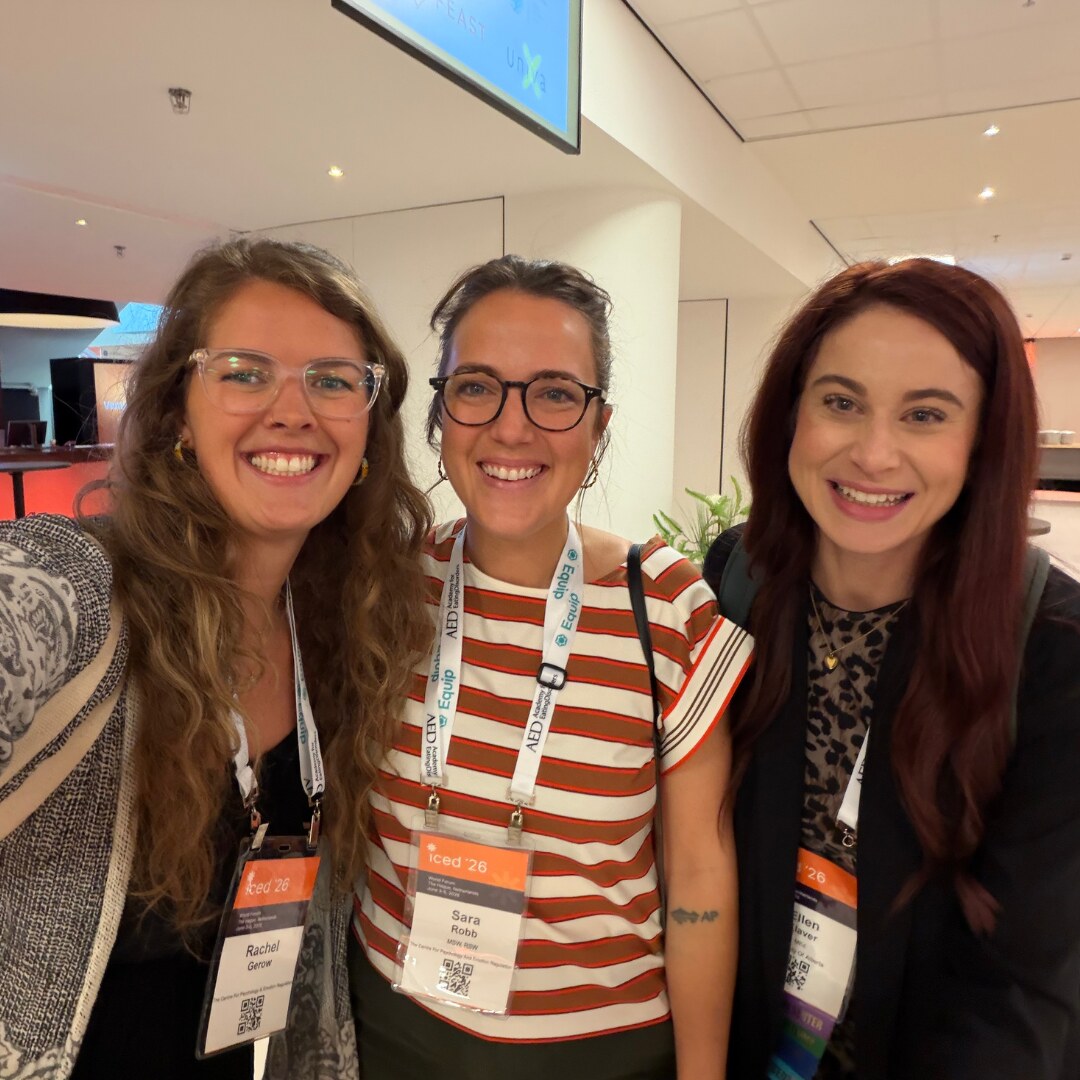
I also had the opportunity to spend a lot of time, in person, with some of my colleagues who I admire and respect deeply. So much of our professional connection happens through screens, emails, meetings and conference calls, so there was something really nice about getting to sit together, have conversations over meals and between sessions, and simply spend time together outside of our usual work environments. Those relationships are something I value enormously, and getting to strengthen them in person was a really special part of the trip.
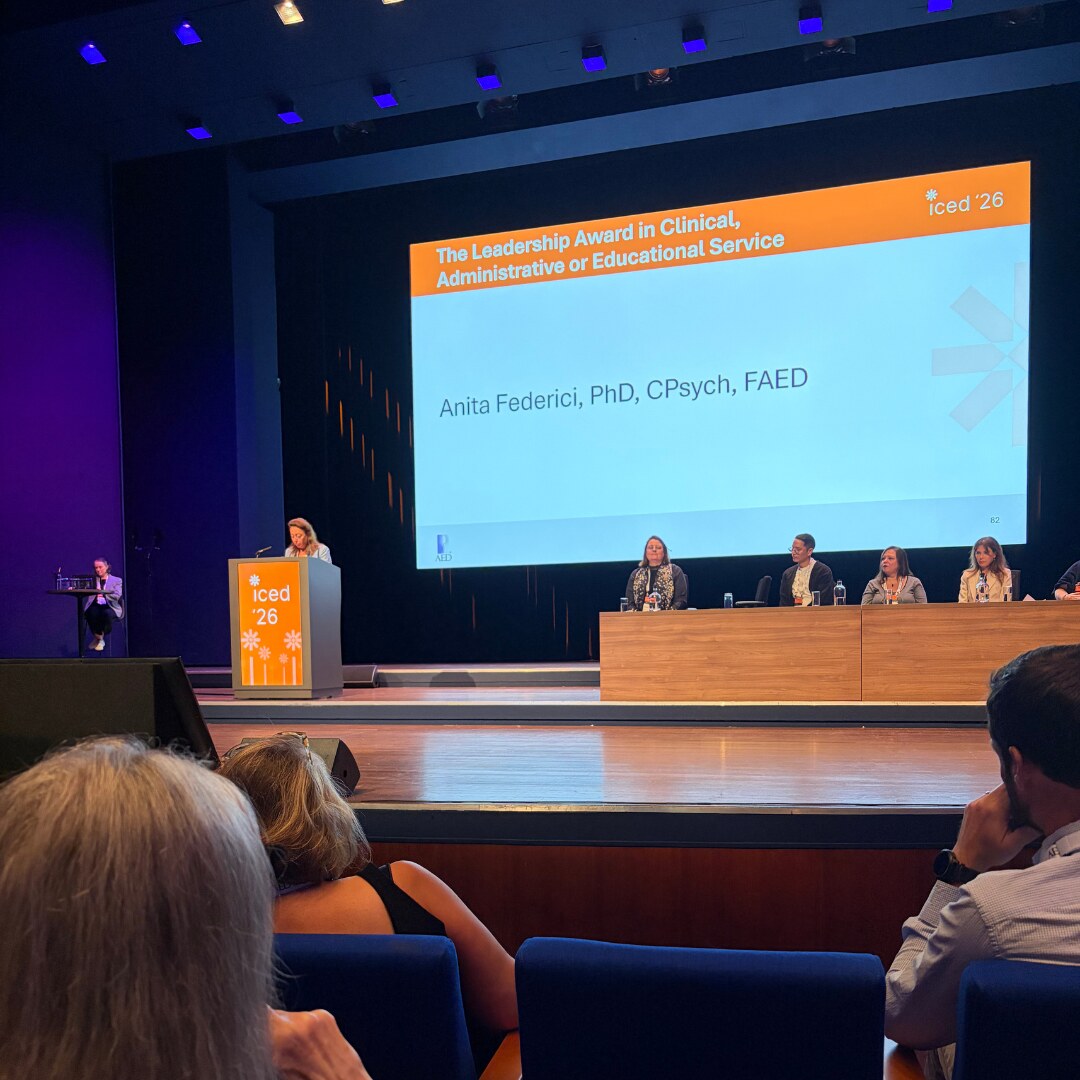
One of the particularly special moments was getting to watch Anita be recognized with the AED Leadership Award in Clinical, Educational or Administrative Service. I have had the privilege of working closely with Anita for almost a decade, and have seen how much she contributes to the eating disorder field, so watching her receive that recognition in front of an international community of people who share her passion for this work was incredibly meaningful. It was also a pretty cool moment to be there in person to celebrate it with her and fellow colleagues.
As clinicians, it can sometimes feel like we are working in our own little bubbles. We spend our days with our clients and families, working through incredibly complex situations, and it can be easy to lose sight of the fact that there is this much larger community of people doing this work alongside us. Being at ICED was a really nice reminder of that. I felt connected to something much bigger than my own practice, while also feeling even more connected to the people I am lucky enough to work alongside.
I came home feeling energized by that sense of community. Not just because there were so many people in one place who care about the same things I do, but because of the diversity of ideas, experiences and perspectives that were represented in the room. It reminded me that our field is constantly evolving, and that some of the most meaningful learning happens when we are willing to listen to one another, challenge our own thinking and stay curious about what is possible.
Learning from the People Around Us
One of the things I appreciated most about ICED 2026 was the opportunity to hear from people who are approaching mental health and eating disorder care from completely different angles. There was research that challenged existing ways of thinking, clinical work that offered new possibilities, and conversations about how we can better incorporate lived experience into the way we understand and deliver care.
It reminded me that good clinical work requires us to stay curious. Even when we have been working in this field for years, there is always more to learn, and there is always another perspective that can change the way we understand something.
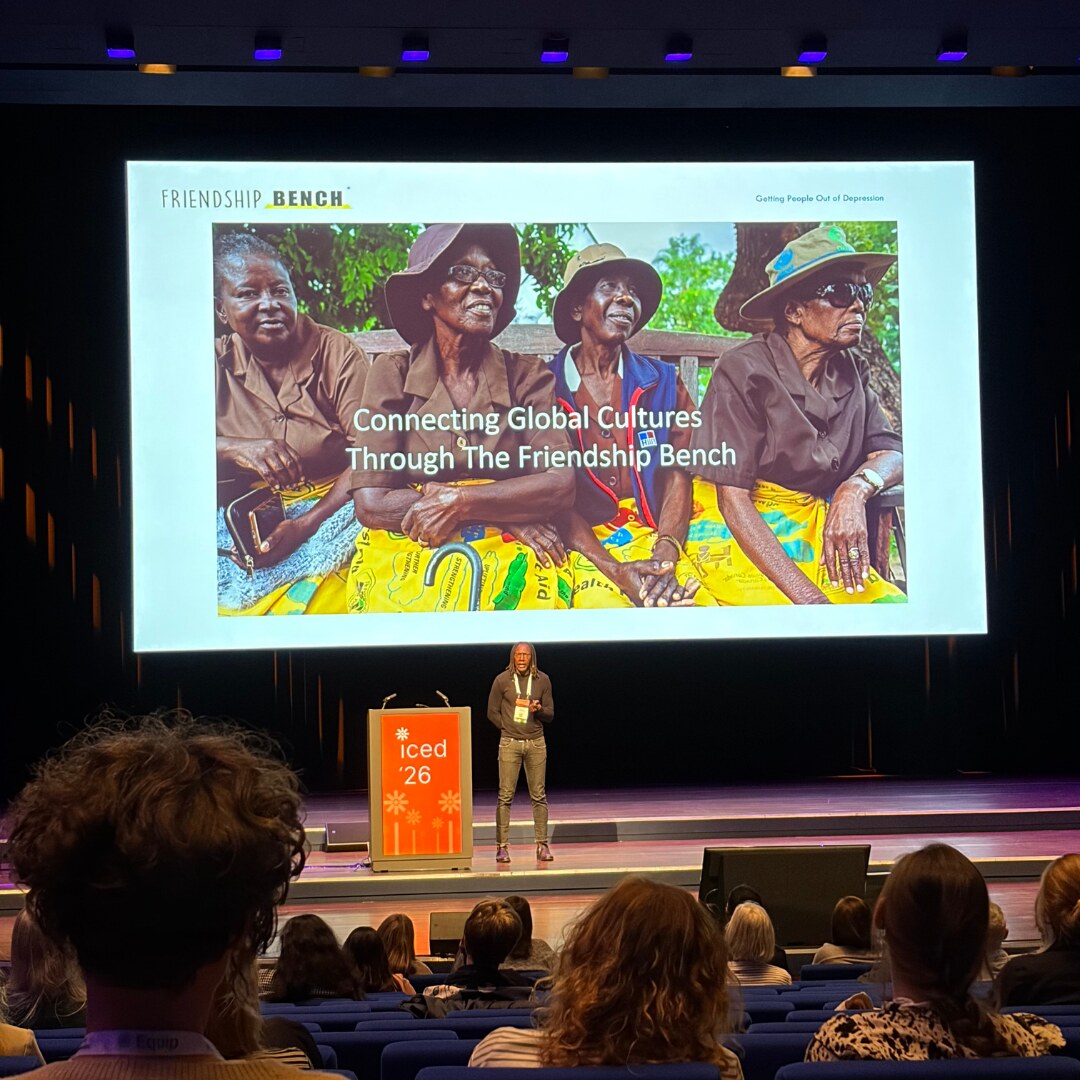
One of the presentations that stayed with me most was the keynote from Dr. Dixon Chibanda, who spoke about the Friendship Bench. Dr. Chibanda is a psychiatrist from Zimbabwe and the founder of this community-based mental health program, which trains community members, specifically grandmothers and other older adults, to provide problem-solving therapy and support within their communities.
What struck me about his presentation was the way it broadened my thinking about community and mental health care. The Friendship Bench is an example of what can happen when we recognize the strengths, knowledge and wisdom that already exist within communities and think creatively about how to make meaningful support more accessible.
It also got me thinking about the knowledge that exists within our own communities. How often do we look to formal institutions, research and professional expertise for answers without necessarily asking what wisdom is already around us?
I found myself thinking about our Elders and the knowledge they carry. There is so much we can learn from people who have spent decades building relationships, navigating
challenges, supporting their communities and passing knowledge down through generations. I wonder what could happen if we created more intentional space to listen to that wisdom and consider how it might inform the way we think about mental health, connection and healing.
That idea has stayed with me. Not because community-based approaches should replace professional mental health care, but because they remind us that meaningful support can come from many different places. Relationships, connection, belonging and community can all play an important role in someone’s mental health and recovery.
In a way, that brought me right back to the experience of being at ICED itself. I had gone to the conference to learn, but I was also experiencing firsthand what it feels like to be part of a community. I was surrounded by people who understood the work I do, who were asking the same difficult questions and who were passionate about finding better ways to support people.
And that feeling of connection became even more meaningful in another moment later in the conference.
“I Felt Seen.”
During a presentation by Anita Federici and Gina Dimitropoulos on their adapted biosocial theory, a clinician in the audience who also shared their own lived experience reflected on the presentation and said that they “felt seen.”
I keep coming back to those two words.
There was something particularly meaningful about hearing that from someone who was both a clinician and someone with lived experience. They were hearing the material through both lenses, and something about the way the presentation conceptualized eating disorders and emotional vulnerability resonated with their own experience. It made me think about how important it is for people to feel genuinely seen in the work we do.
In clinical practice, we spend a lot of time learning how to assess symptoms, identify patterns, develop treatment plans and apply evidence-based interventions. All of those things matter. But none of them replace the experience of sitting across from someone and helping them feel that their experience makes sense and that they are understood.
Eating disorders are incredibly complex. They can look very different from one person to another, and the reasons someone develops an eating disorder, the role it plays in their life and what recovery ultimately looks like can all be different.
When we lose sight of that individuality, there is a risk that treatment can start to feel like a checklist. We know what the evidence tells us is important, but we also need to make space for the person in front of us.
That moment at ICED reminded me of the importance of continuing to ask: Does this person feel seen?
Not just assessed. Not just treated. Seen.
What does a “life worth living” mean to you?
This connects to another idea that came up throughout the conference and that I have continued thinking about since returning home: the idea of a “life worth living.”
In eating disorder treatment, there are obviously important clinical goals. We want to support people in restoring their physical health, reducing eating disorder behaviours, increasing flexibility and developing more effective ways of coping. These things are important, and they can be incredibly difficult work.
But recovery is ultimately about more than the absence of an eating disorder. What are we recovering for? What does someone actually want their life to look like when the eating disorder is no longer making decisions for them?
Those questions can look different for everyone. Maybe it is reconnecting with relationships. Maybe it is returning to school or work. Maybe it is travelling, becoming a parent, playing a sport, pursuing a creative interest, or simply being able to spend an ordinary afternoon without having every decision shaped by food, exercise or body image.
There is no single definition of a life worth living.
I think that is where the idea becomes particularly hopeful. If we can help someone identify what matters to them and what they want their life to be about, recovery becomes about moving toward something rather than simply moving away from symptoms.
It also gives us room for flexibility. A life worth living doesn’t have to look the way someone else thinks it should look. Recovery doesn’t have to mean becoming a particular version of yourself. It can mean figuring out who you want to be and what you want your life to hold, and then working toward that.
As a clinician, I think that is one of the most meaningful parts of the work. We can bring our clinical knowledge, our training and the evidence base to the room, but we don’t get to decide what makes another person’s life meaningful. That belongs to them, and our job is to help them discover that.
Bringing ICED home
I came home from ICED with plenty of notes, new research to read, ideas I want to bring into my clinical work and conversations that I know will continue to shape the way I think about eating disorder treatment.
But I think what I brought home most was a renewed sense of connection to the field.
I feel incredibly lucky to work alongside people who are thoughtful, curious and passionate about this work, and ICED gave me the opportunity to spend time with many of those people in person. It also gave me the chance to meet people from different countries and different parts of the eating disorder community who challenged me to think about familiar questions in new ways.
It also reminded me that the work can be hard. Eating disorder treatment is complex, and working with people who are struggling can be emotionally demanding. Having a community around us matters. Having people to learn from, people to challenge us, people to celebrate the wins with and people who understand why this work matters can make a real difference.
Maybe that is part of why the experience felt so energizing. I was surrounded by people who reminded me that we are all contributing to something much bigger than ourselves.
So yes, ICED was a highlight of my summer because I got to spend time in The Hague, explore a beautiful part of the world and fully embrace my European summer dreams.
But it was also a highlight because I came home inspired.
Inspired by the people I met, the colleagues I spent time with, the ideas I heard, the perspectives I was challenged by, and the reminder that at the centre of all of this work is a person trying to build a life that feels meaningful to them.
And perhaps the moment that captures the experience best for me is still those three words:
“I felt seen.”
Because ultimately, that is what I hope we continue to strive for in eating disorder care: not just helping people change, but helping them feel understood, supported and empowered to build a life that is genuinely their own.