
Written by Dr. Anita Federici. Dr. Anita Federici AED Leadership Award recipient shares why she believes people make sense and how understanding is central to healing.
At the beginning of June, I was honoured to receive the Academy for Eating Disorders Leadership Award at the annual conference in The Hague. The award was presented by my dear friend and colleague, Dr. Gina Dimitropoulos, which made the experience especially meaningful.
Awards are strange things. On one hand, they’re lovely. It’s meaningful when work you’ve poured yourself into over many years is recognized by people you respect. On the other hand, they can feel a bit uncomfortable. Most of us don’t do this work because we’re chasing awards. We do it because there are questions we can’t stop asking.
As I’ve reflected on what this recognition means to me, I keep coming back to one idea: the importance of being seen for who you are. Not seen in the public sense, but in a deeper way. To be understood, recognized, known in the world.
The Academy described this award as recognizing leadership and contributions that have improved the lives of people with eating disorders beyond those I’ve worked with directly. Reading those words, what struck me wasn’t the leadership part. It was the recognition from colleagues who understand the questions that have driven my career. Because if there has been one consistent theme throughout my professional life, it’s this: People make sense.
And I know that sounds obvious, but I don’t think we act as though it’s true nearly often enough. Some of the people I’ve felt most drawn to throughout my career have been those who are regularly misunderstood. People described as difficult, resistant, complex, chronic, unmotivated, untreatable. People whose behaviours seem baffling or frustrating to those around them.
Yet when you slow down and become curious enough, their lives almost always make sense.
Not because their suffering makes sense or because their behaviours are effective, but because human beings are always responding to something.
A history.
A biological vulnerability.
A sensation or perception.
An emotion.
A nervous system trying desperately to solve a problem.
Long before I became a psychologist, I was trying to understand this. As a child, I was deeply curious about family members struggling with significant mental health difficulties who were excluded, dismissed, medicated, stigmatized, and misunderstood. I remember feeling confused by how often the people I knew seemed understandable to me but somehow not understandable to the systems around them.
I think that confusion became a question. And that question eventually became a career.
The truth is that I never set out to become an eating disorder specialist. I wasn’t searching for a specialty. I was searching for understanding. I wanted to understand why people made sense to me but not always to the world around them. Over the years, that search has taken me in directions I never could have predicted. It has led me to extraordinary clients, families, students, colleagues, and collaborators. It has led me into conversations about suicide, trauma, neurodiversity, chronic illness, personality disorders, caregiver burden, systems of care, and eating disorders. Different topics on the surface, perhaps, but all connected by the same question:
What happens when we stop assuming people are the problem and start trying to understand the problem they are responding to? That question feels especially relevant right now.
As I look toward this year’s International Conference on Eating Disorders, I see a field that is beginning to wrestle more openly with complexity and with what is not known. We are having harder conversations. We are paying more attention to the people who haven’t fit neatly into dominant models. We are questioning concepts that once seemed settled. We are becoming more interested in lived experience, neurobiology, trauma, caregiver experiences, and the realities of people whose journeys don’t follow the trajectories our textbooks promised.
That makes me feel like I’ve made a little bit of a difference.
The future of this field won’t be built by finding simpler answers or by holding too tightly to the past. It will be built by getting better at understanding why people make sense without losing hope for change.
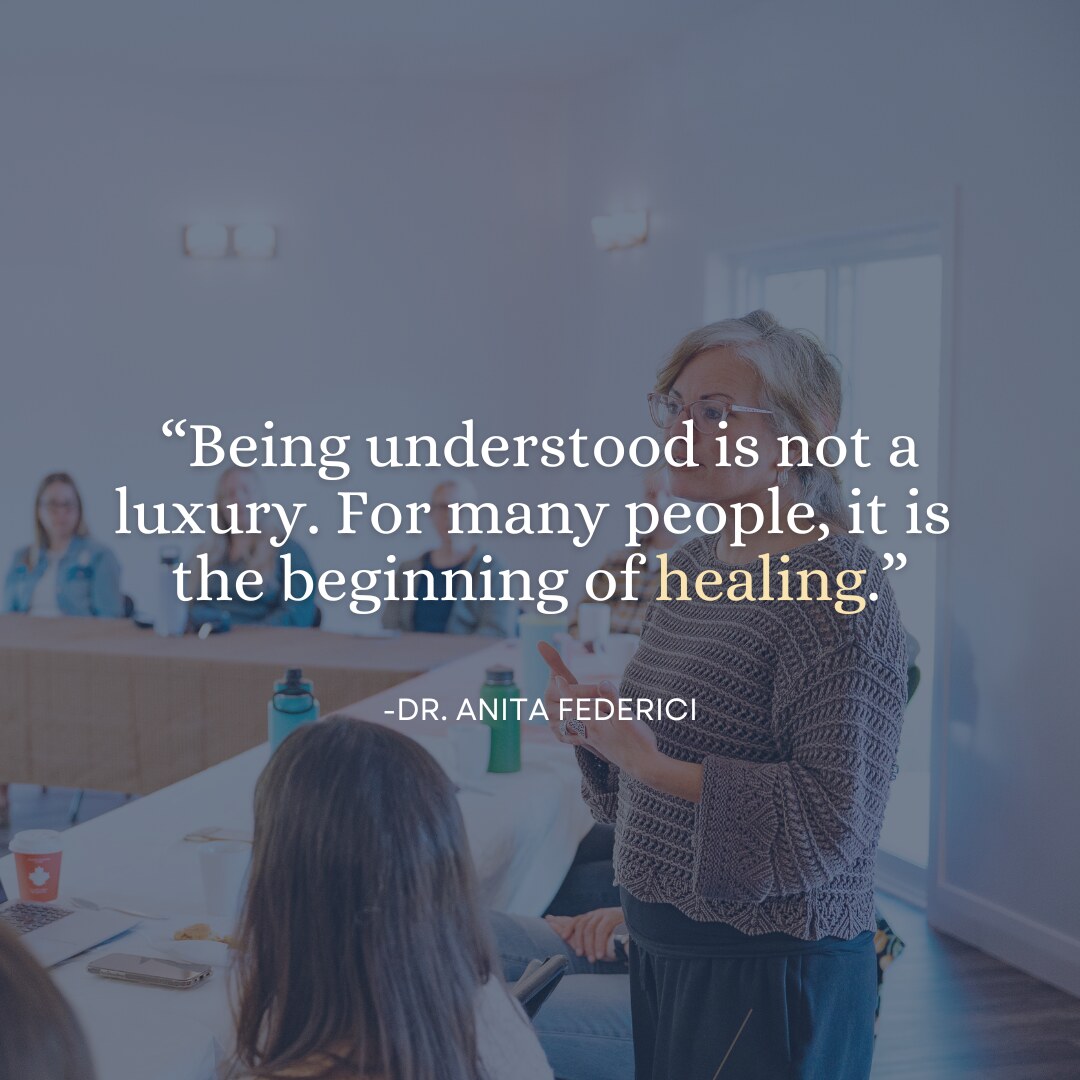
So while I am deeply grateful for this award, what I find myself feeling most is gratitude for the people who have shared this journey with me. The mentors who challenged me, the colleagues who trusted me, the students who pushed my thinking, the families who taught me, and the clients whose courage continues to humble me. Mostly, though, I feel grateful that after all these years, I still find the same question compelling. How do we help people feel understood? Because I’ve come to believe that being understood is not a luxury. For many people, it is the beginning of healing. And perhaps for those of us doing this work, being seen by our colleagues every now and then is a reminder that the years spent swimming upstream were not for nothing.